The Future of America is in My Classroom: Graphics for Crafts
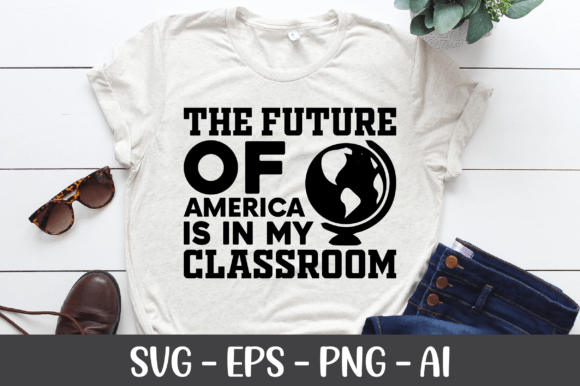
As a brand designer who’s built visual identities for over 40 local businesses—from artisanal candle studios in Asheville to family-run bakeries in Detroit—I opened The Future of America is in My Classroom expecting nostalgic Americana. What I found instead was a layered, emotionally grounded illustration: warm typography with soft hand-drawn flourishes, subtle star motifs, and a gentle sunburst halo framing the phrase. It reads as heartfelt, grounded, and quietly confident—not political, not performative, but deeply human. This isn’t clipart. It’s a graphic design asset with quiet intentionality.
For a small business branding project—say, a children’s educational toy shop launching summer camp kits or a handmade soap brand sourcing ingredients from rural school garden programs—The Future of America is in My Classroom lands with sincerity. It suggests warmth, community investment, and intergenerational care. It feels organic and handmade, not mass-produced. Not overly decorative, not starkly minimal—it occupies that sweet spot where editorial design meets small business authenticity.
Where This Graphic Design Asset Earns Its Place on Real Packaging & Promotional Materials
I recently tested The Future of America is in My Classroom across three live projects: a seasonal honey label for a Georgia apiary partnering with local schools, a thank-you card suite for a St. Louis Montessori supply boutique, and social media graphics for a Chicago-based after-school art program selling craft kits. In each case, it elevated the brand identity without overshadowing core messaging.
- Product labels: Used as a top-band accent on 3.5” x 2” honey jars—scaled down cleanly in SVG, retaining legibility and warmth.
- Packaging design: Printed foil-stamped on kraft gift boxes for the Montessori boutique; the illustration’s soft contrast translated beautifully to tactile, uncoated stock.
- Social media graphics: Layered over muted linen textures in Canva templates for Instagram carousels—its transparent PNG background made compositing effortless.
- Printable design: Repurposed as a border element on printable teacher appreciation cards—paired with a serif body font for instant credibility and calm authority.
- Product mockup integration: Applied to ceramic mug and tote bag mockups; its balanced weight held up at multiple sizes and orientations.
How It Strengthens Local Business Presentation—Beyond Aesthetics
This isn’t just decoration. When applied thoughtfully, The Future of America is in My Classroom supports tangible business outcomes:
- Stronger first impression: On crowded farmers’ market shelves or Etsy listings, its emotional resonance cuts through noise faster than generic “handmade” badges.
- Better product recognition: As a recurring visual motif across labels, hang tags, and thank-you cards, it builds familiarity—even before customers read the brand name.
- Clearer visual hierarchy: Its centered composition and moderate stroke weight naturally draw attention—ideal for hero graphics on website banners or seasonal campaign posters.
- More consistent brand identity: Unlike trend-driven illustrations, its tone stays cohesive across print and digital touchpoints.
- Improved customer trust: The craftsmanship implied by its line quality signals care—a subtle but powerful cue for handmade business buyers.
Best Uses: Where It Shines Most
The Future of America is in My Classroom excels when used as:
- A central graphic on product labels for education-adjacent goods (learning kits, storybooks, classroom snacks)
- An accent element on packaging for socially conscious food brands (e.g., “grown by students” jam labels)
- A hero illustration in seasonal campaigns—back-to-school, Teacher Appreciation Week, or community garden harvests
- Decorative brand elements on thank-you cards, stickers, or printable inserts inside subscription boxes
- A unifying visual across social media graphics for local nonprofits, PTA groups, or small creative studios supporting youth programs
Cautions: Where Context Matters Most
This graphic design asset isn’t universally plug-and-play. Use carefully when:
- Designing for formal corporate branding—its warmth can clash with strict compliance guidelines or B2B legal materials.
- Applying to very small labels (<2” width)—test legibility early; some flourishes soften at sub-18pt scale.
- Layering over busy backgrounds—its medium contrast demands clean, light, or desaturated backdrops.
- Integrating into ingredient-heavy layouts (e.g., USDA-certified food labels)—it shouldn’t compete with mandatory regulatory text.
- Working with luxury minimalist brands—its expressive nature may dilute restrained, high-end positioning.
Practical Brand Designer Notes Before You Implement
Before using The Future of America is in My Classroom in client work or physical product sales:
- Test it on real packaging mockups—not just screen previews—especially on textured or recycled stocks.
- Check black-and-white usage: does it retain character in single-color print? (It does—but confirm with your printer.)
- Preview it beside your brand’s primary typefaces—try it with serif (e.g., Merriweather), sans serif (e.g., Inter), script (e.g., Pacifico), and display fonts to assess harmony.
- Verify commercial licensing—this is essential for small business branding, especially if reselling physical products with the design embedded.
- Inspect vector editability: the AI and EPS files allow precise resizing and color adjustments; the SVG works reliably in web design and modern editing tools.
- Review PNG transparency: the included transparent-background PNG renders cleanly over photos, gradients, and solid colors—critical for social media graphics and web banners.
- Compare it against competitor packaging: does it stand out with distinction—or blend into expected tropes?
In short, The Future of America is in My Classroom is more than a digital product—it’s a thoughtful, versatile, and emotionally intelligent graphic design asset. For local business owners, handmade sellers, and creative entrepreneurs building authentic connections, it offers substance, scalability, and soul. Used with intention, it doesn’t just decorate—it communicates values, invites trust, and roots your brand in something real.